Chama: Django to Astro SaaS Migration
Migrated a Django group savings platform to Astro, converting 13 of 19 React components to zero-JS — cutting bundle size and load times dramatically.
This is a fictional brand UWC built to demonstrate what we ship for real founders. The pipeline, agents, and screenshots are real; the business is illustrative.
The Challenge
MyChama had a Django-based group savings platform that was slow to load, expensive to host, and difficult to iterate on. The React frontend shipped heavy JavaScript bundles to every visitor, even for pages that were purely informational. Mobile users in particular suffered from long load times.
Our Approach
We rebuilt the frontend with a component-by-component migration strategy. Each page was evaluated: does it need interactivity, or can it be static? Of 19 sections, 13 became instant-loading static pages. The remaining 6 kept full interactivity. The backend API stayed untouched — no rewrite needed.
Key Results
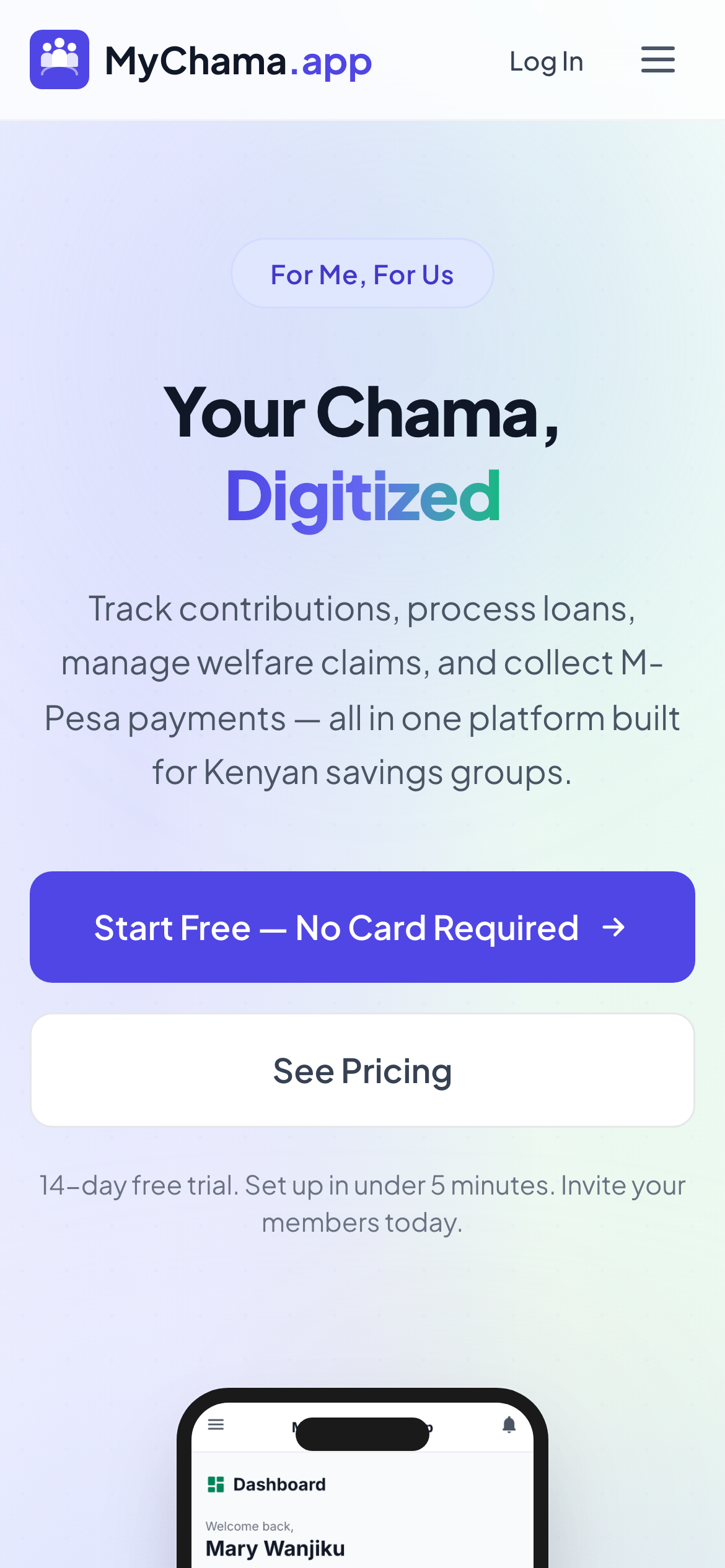
Mobile view
Services Provided
The situation
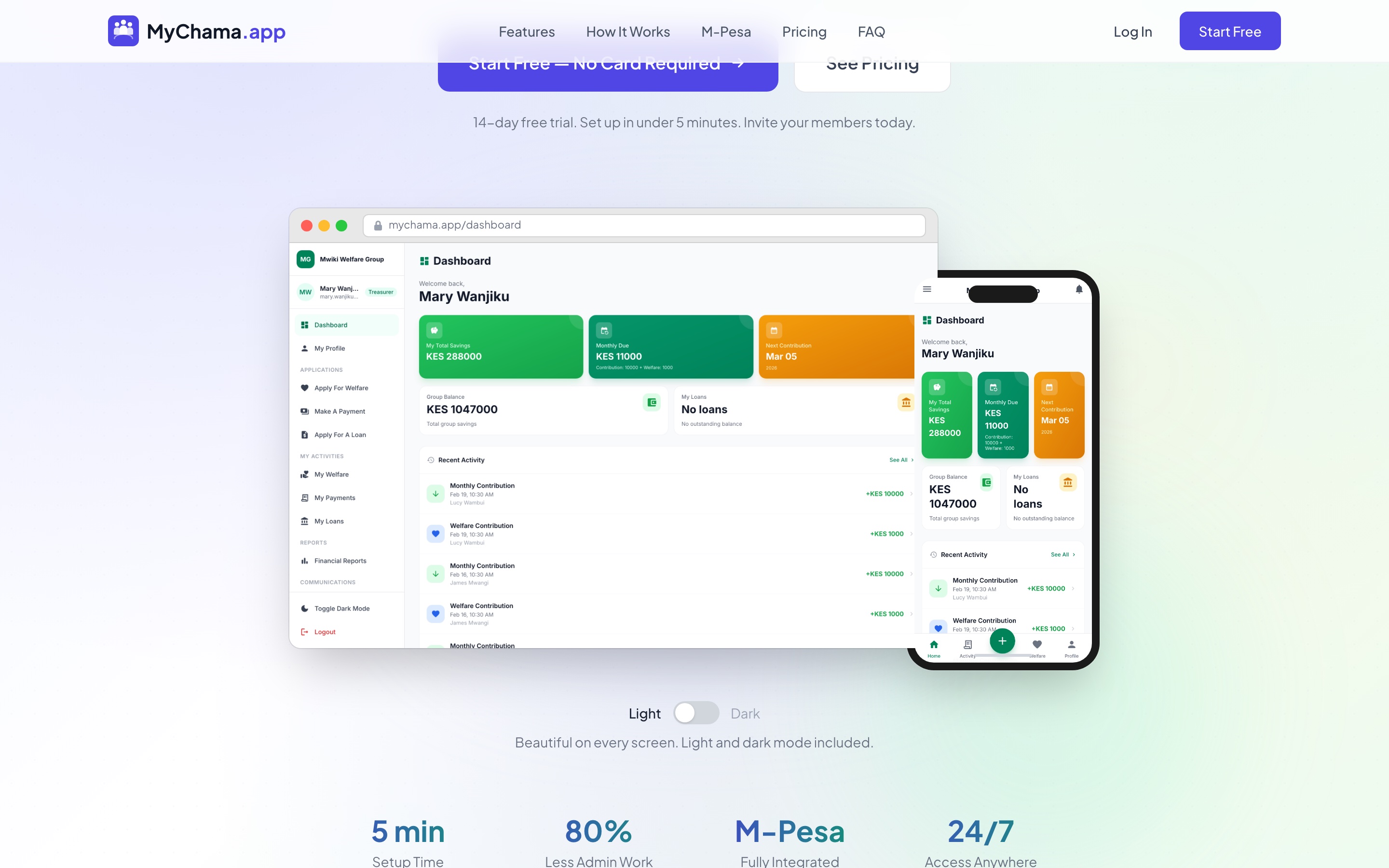
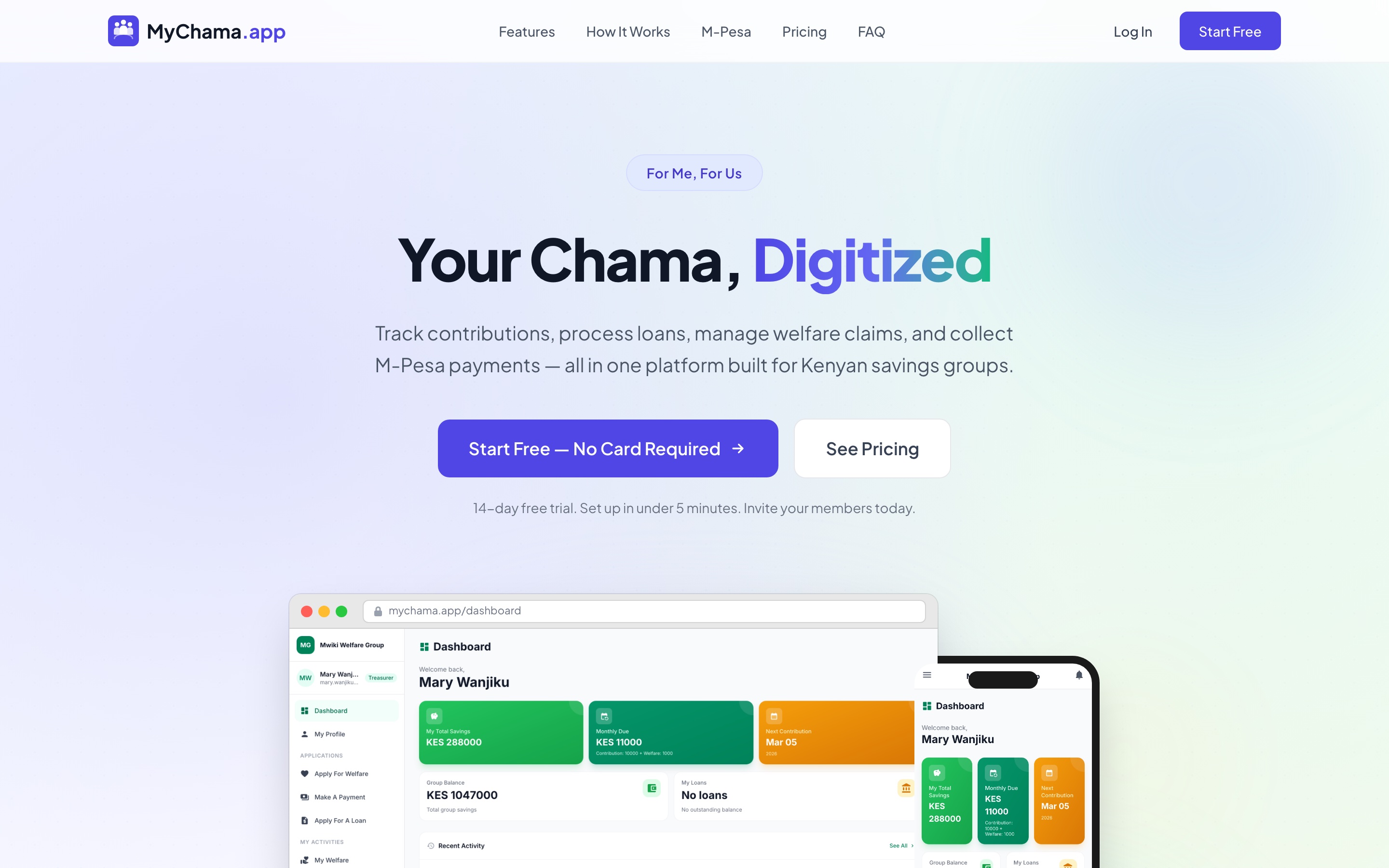
MyChama is a group savings platform — think digital chama (community savings group) — where members pool funds, track contributions, and manage payouts. The platform had a working product with real users, but the technology was holding it back.
The original setup mixed Django templates with React components and sat on traditional hosting. It worked, but it was slow, expensive, and hard to change.
The problems
- Slow on mobile: Every page shipped the full React runtime, even pages that just showed text and images. Users on mid-range phones and variable connections waited 3+ seconds for pages to load
- Slow, outdated hosting: Traditional server hosting meant paying for idle compute with no performance benefit
- Hard to update: The Django + React hybrid made even simple changes slow and error-prone. Changing a heading could break a component
- Falling behind: Competitors with modern, fast platforms were gaining ground
What we built
Component-by-component migration
Rather than rewriting everything from scratch (risky, expensive), we audited every page individually:
- Does this page need interactivity? If not, convert it to a lightweight static page
- Does it handle forms, payments, or real-time data? Keep the interactive features intact
- Don't touch the backend — the API that powers everything stays exactly as-is
70% less code for users to download
Of 19 sections in the app, 13 didn't need to run code in the browser at all. They were showing information, navigation, or pricing — things that don't require heavy downloads. By converting these to lightweight pages, we cut 70% of the code users had to download without changing any functionality.
The features that matter kept working
The remaining 6 sections — transaction forms, member dashboards, and payment integrations — kept their full interactivity. Members didn't notice the migration. They just noticed the speed.
Global deployment
The new site loads from 300+ servers worldwide. No matter where a member is, the closest server responds — faster, more reliable, and built to scale.
The results
- Page load time: From 3.2 seconds to under 1 second on mobile
- Code downloaded: 70% less — only what's needed
- Hosting: Cloudflare edge network vs. traditional single-server hosting
- Google scores: All green across every performance metric
- Same features: Members didn't lose any functionality — everything works the same, just faster
Why this matters for your business
If you have a web application that feels slow, you don't necessarily need to rebuild everything. Often the fix is identifying which parts are carrying unnecessary weight and streamlining them — without disrupting the features your users depend on.
We also built a marketing site that presents the SaaS story to MyChama's target audience — packaging the service value and helping reach the right niche through SEO and content.
Visit the app: mychama.app
"The site feels completely different now. Pages load instantly and our members actually use the mobile app without complaining about speed."
More from this project